My role:
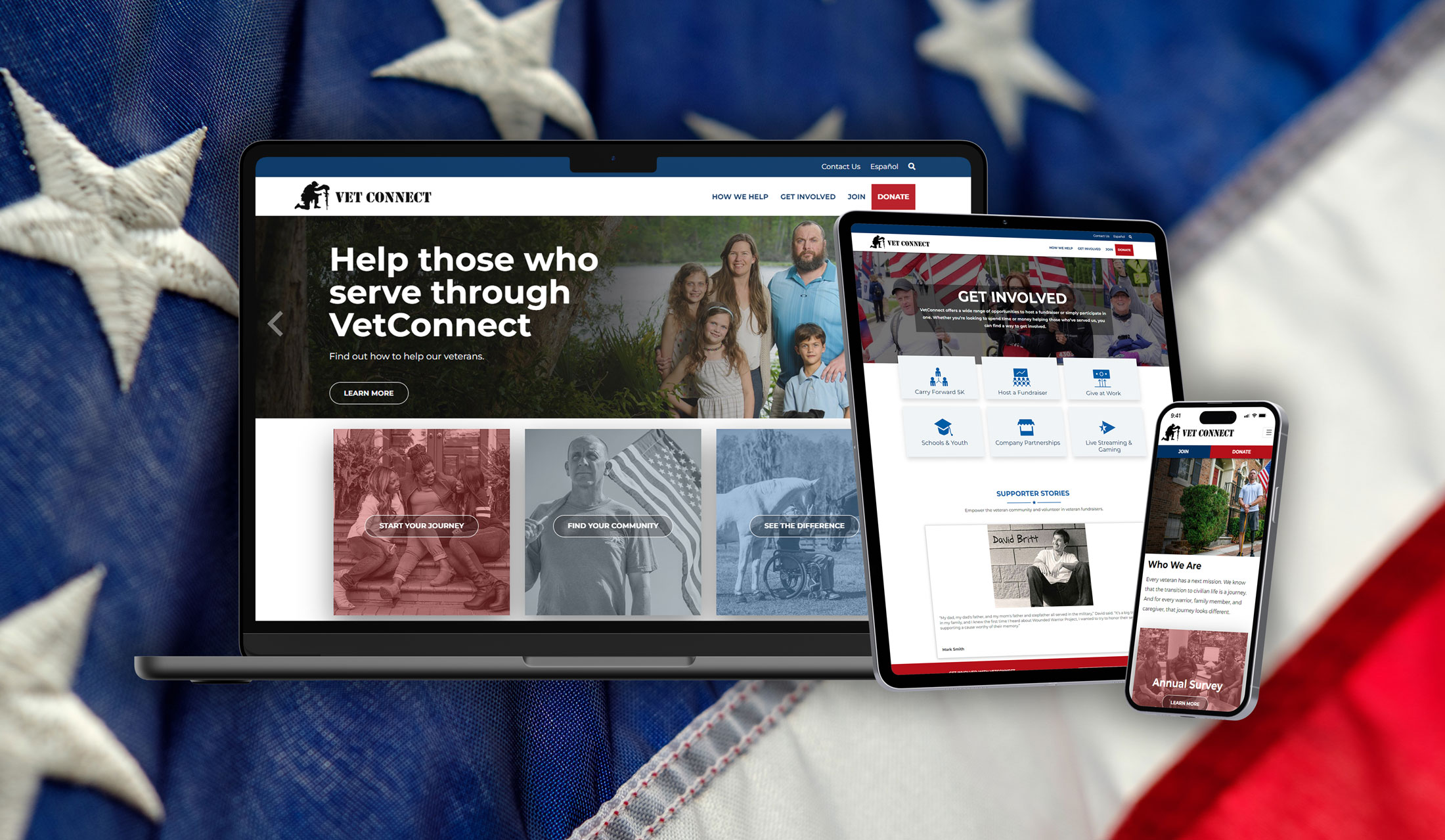
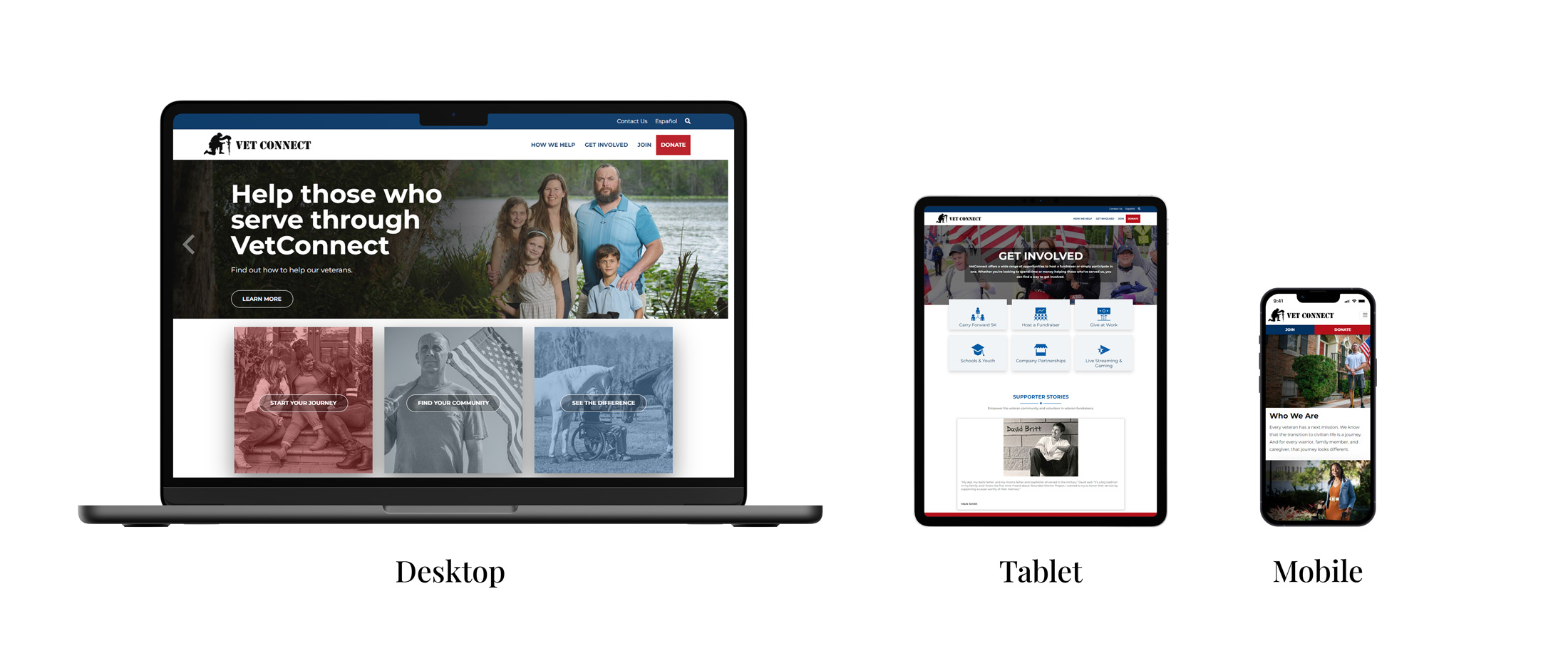
I was the UX designer responsible for creating responsive designs for desktop, tablet, and mobile form factors.
Conducted user research and usability testing for the project.
The problem:
There are many people who want to support our veterans but don’t know how or where to start.
The goal:
Design a responsive website that connects people with veterans, tells their stories, and find impactful programs.
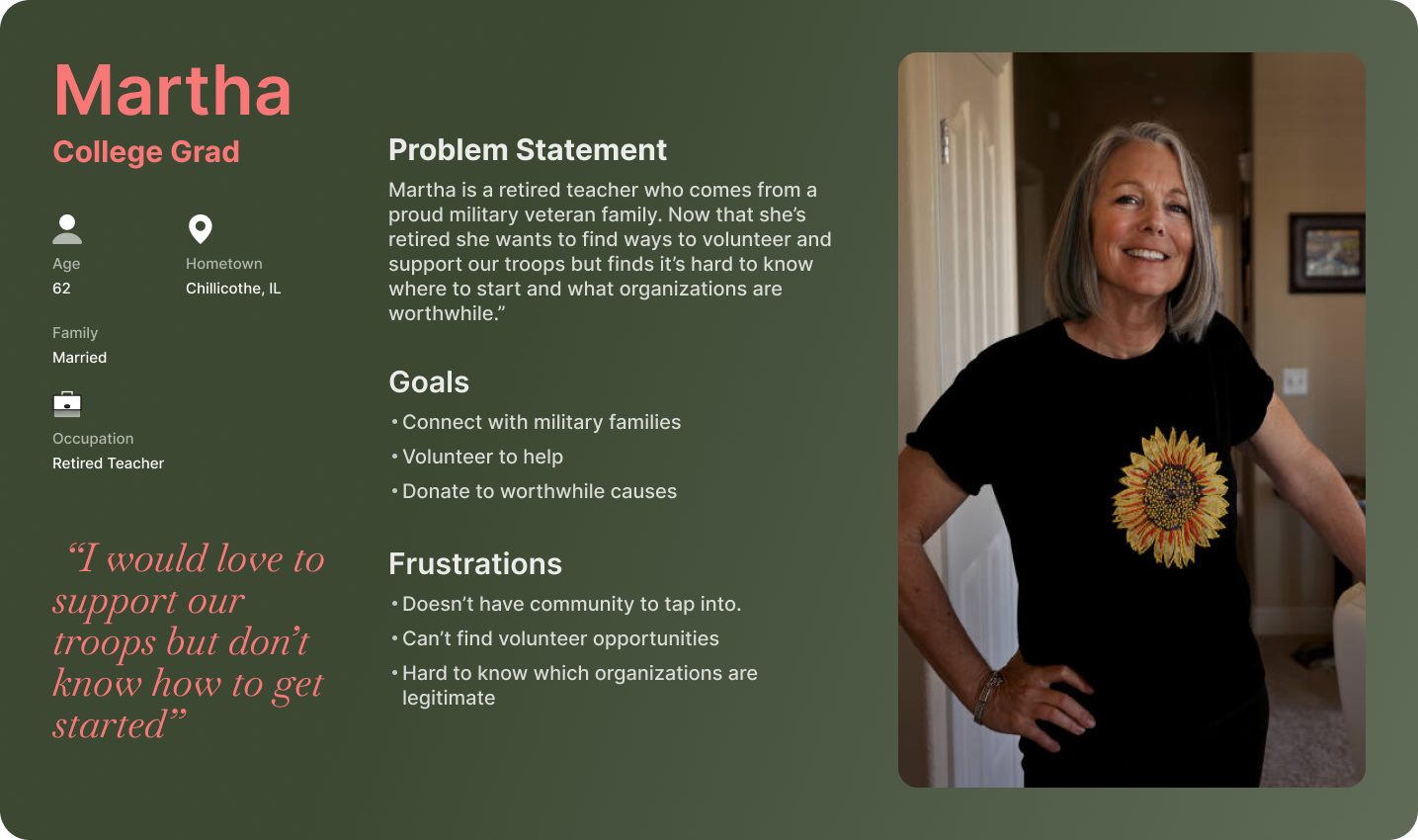
“I would love to support our troops but don’t know how to get started”
MarthaRetired teacher
Design Process

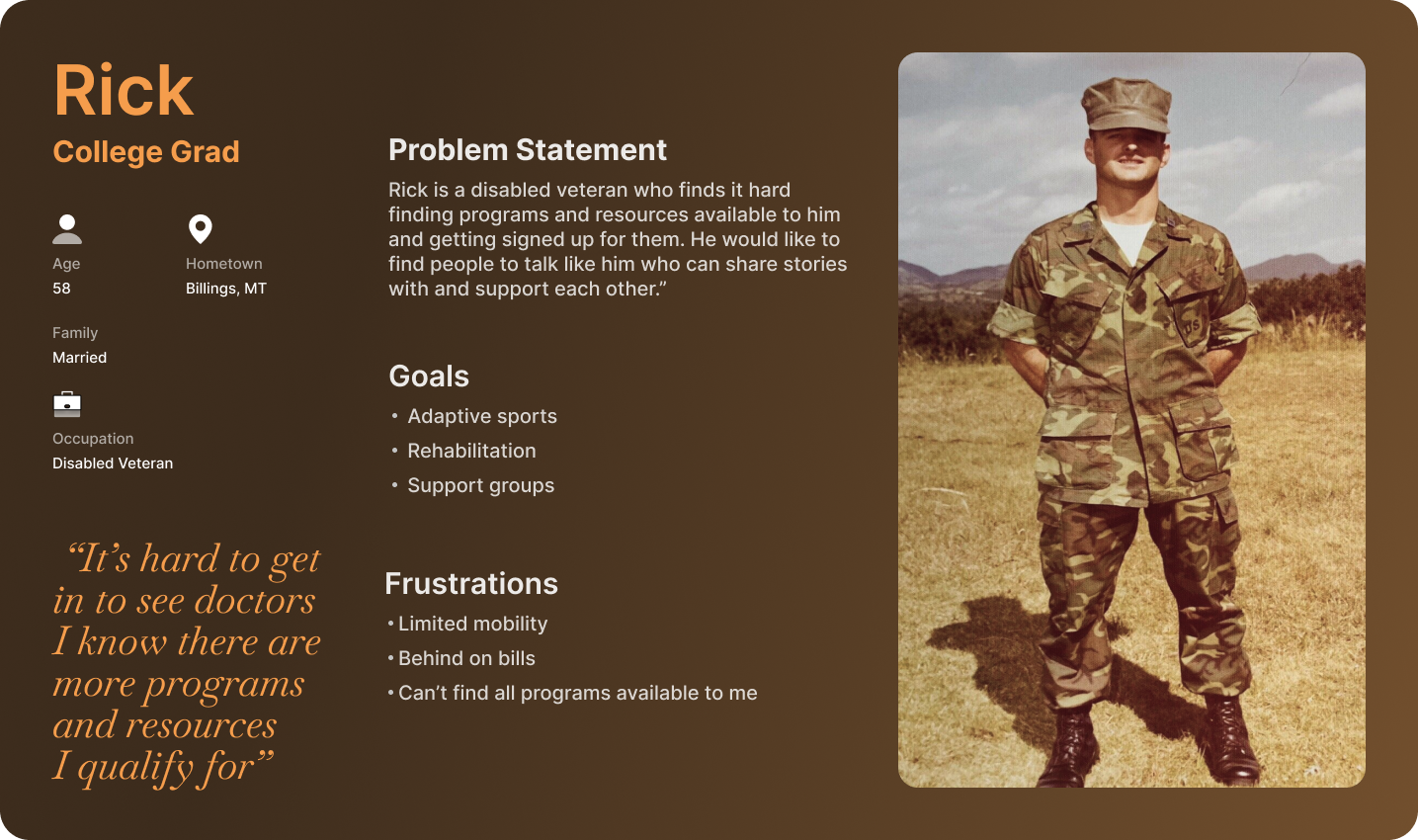
Primary Personas
User Research
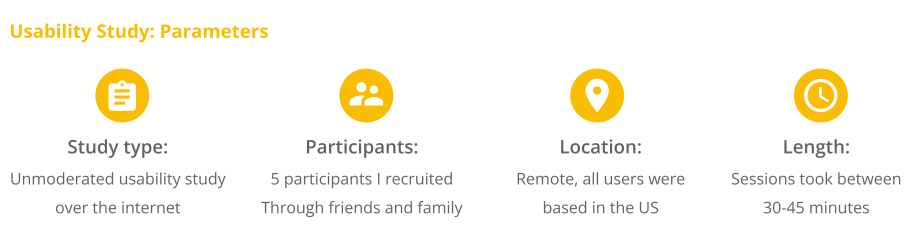
I conducted a usability study remotely through online tools like Zoom and Miro to hear the needs and goals of real people interested in this space.
It was really inspiring to hear from vets and military families on what would make their lives better by connecting them to resources and communities for support.
User pain points:
- Connection with Vets: Users wanted to hear stories of veterans to have a connection to the cause.
- Trustworthiness of org: Users wanted to know where their donations would make an impact.
- Overwhelming UI: Having too many items on screen confused users so I simplified the designs to be less overwhelming.
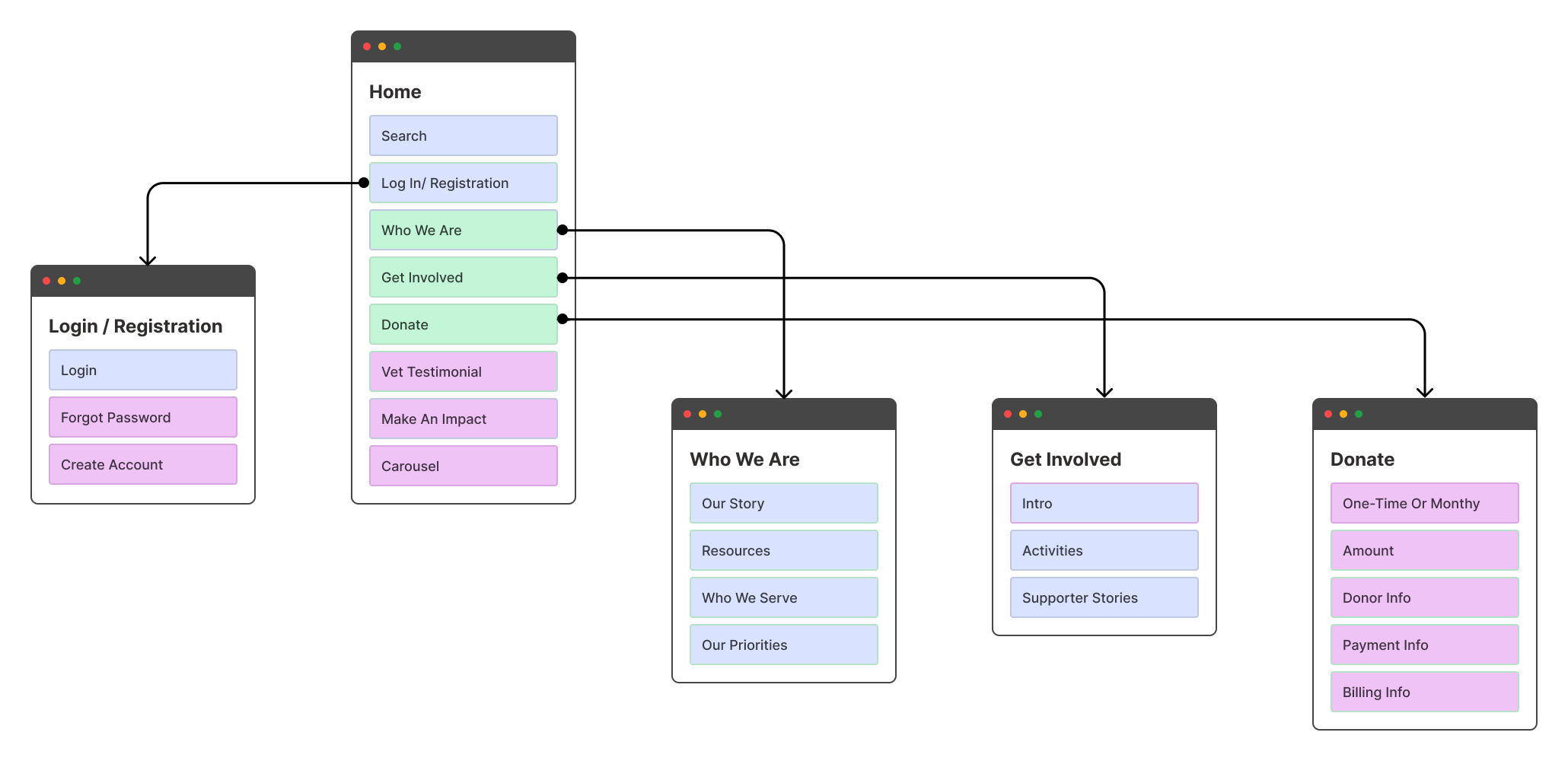
Sitemap
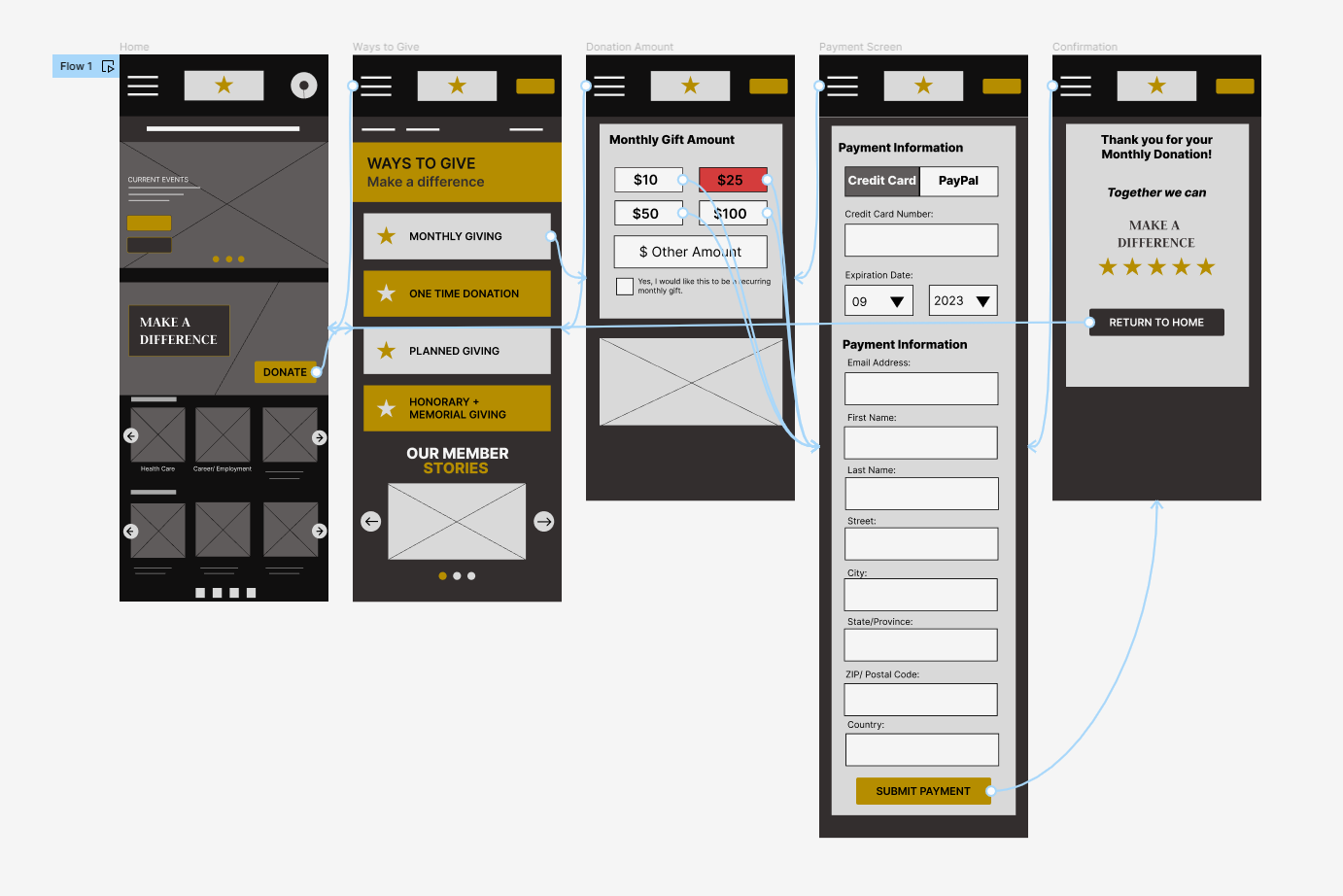
Interactive Prototypes
Initial prototype
High fidelity prototype
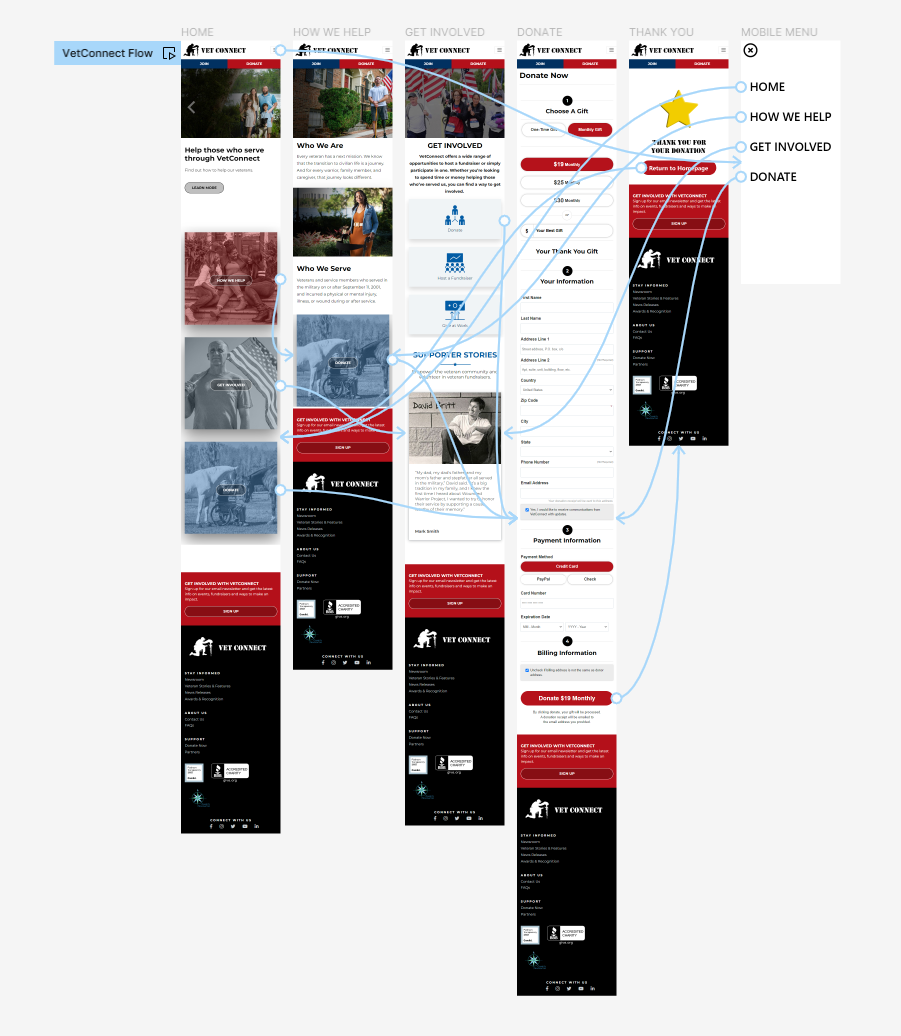
Responsive Web Design
For this project I utilized a mobile-first approach since user interviews revealed many people would be browsing on their phones most the time. I created responsive designs for desktop, tablet, and mobile breakpoints.
Conclusion
“I would love to support our troops but don’t know how to get started”
MarthaRetired teacher
Impact:
Things that seemed obvious to me were not to all the users I tested the site with. From simplifying the UI to identifying what content inspired people to act, user research was key to improving the design of VetConnect.
What I learned:
No matter how thought out your designs, you will always learn ways to improve your experience by testing it with real users.
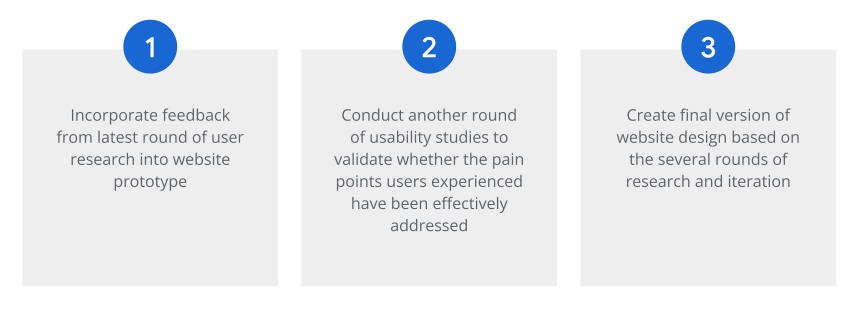
Next steps: